 Every so often, my inbox turns into a greatest-hits album of scams, and today’s entry is a particularly convincing one.
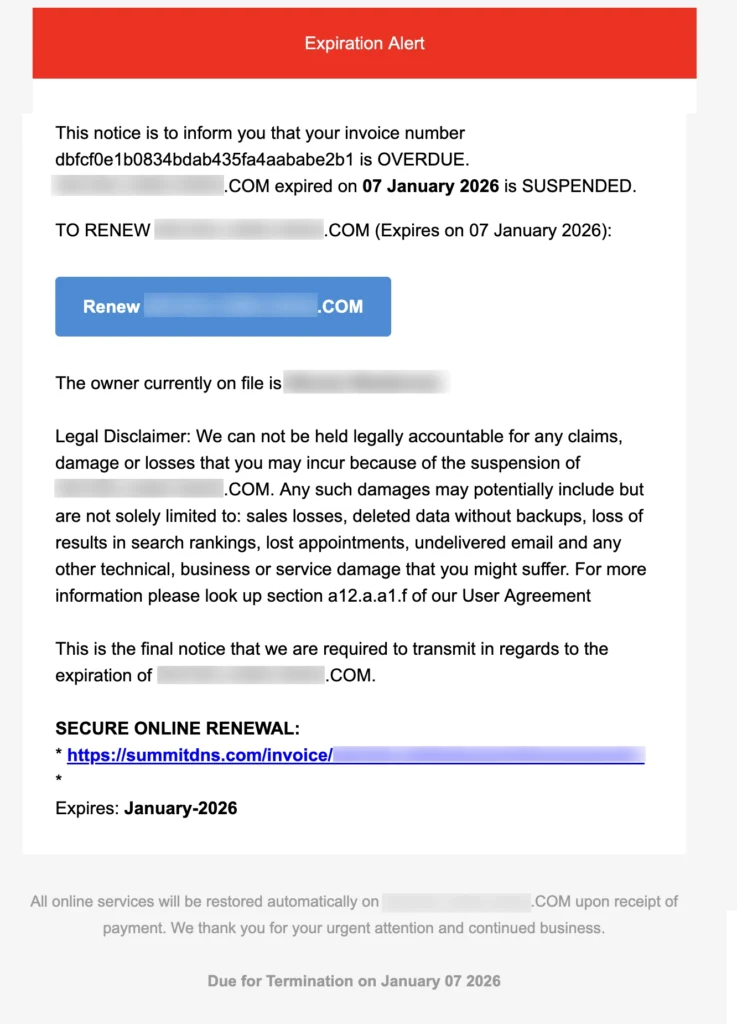
This morning, I received an urgent-looking email claiming that one of my domains had expired and was already suspended. The message included an invoice number, legal disclaimers, dire warnings about lost data and search rankings, and a large, friendly “Renew” button. Everything about it was designed to create panic and urgency.
There was just one problem: it wasn’t true.
The domain referenced in the email does not expire until January 27, 2026, and it is not registered with the company sending the notice. I confirmed this directly through my actual domain registrar before doing anything else.
This is exactly how these scams work.
How the Domain Renewal Scam Operates
Scammers send emails that:
- Look official and legal
- Use words like FINAL NOTICE, SUSPENDED, or DUE FOR TERMINATION
- Include an invoice number to feel legitimate
- Link to a payment page that appears to renew your domain
If you click and pay, one of two things usually happens:
- You’re charged wildly inflated annual fees, sometimes hundreds of dollars per year
- You unknowingly transfer your domain to a shady registrar that’s difficult (or expensive) to escape
In the worst cases, people actually lose control of their domain, email, or website.
How to Protect Yourself
Here’s what to do if you receive one of these emails:
- Do not click the links
- Do not panic
- Log into your actual domain registrar directly (not through the email)
- Check the expiration date yourself
- Confirm who the registrar really is
If the email doesn’t match what you see in your registrar account, it’s almost certainly a scam.
Why This Matters
Your domain name is your digital real estate. Losing it, or paying excessive renewal fees, can disrupt your business, your email, your SEO, and your credibility. These scams rely on fear and confusion, especially for people who don’t deal with domains regularly.
If you manage multiple websites or help clients with theirs, this is one of those things worth educating people about before it happens.
When in doubt, slow down, verify independently, and never trust urgency delivered via email.